

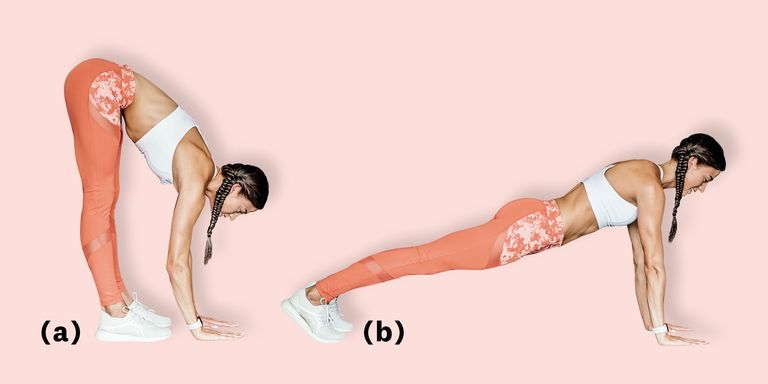
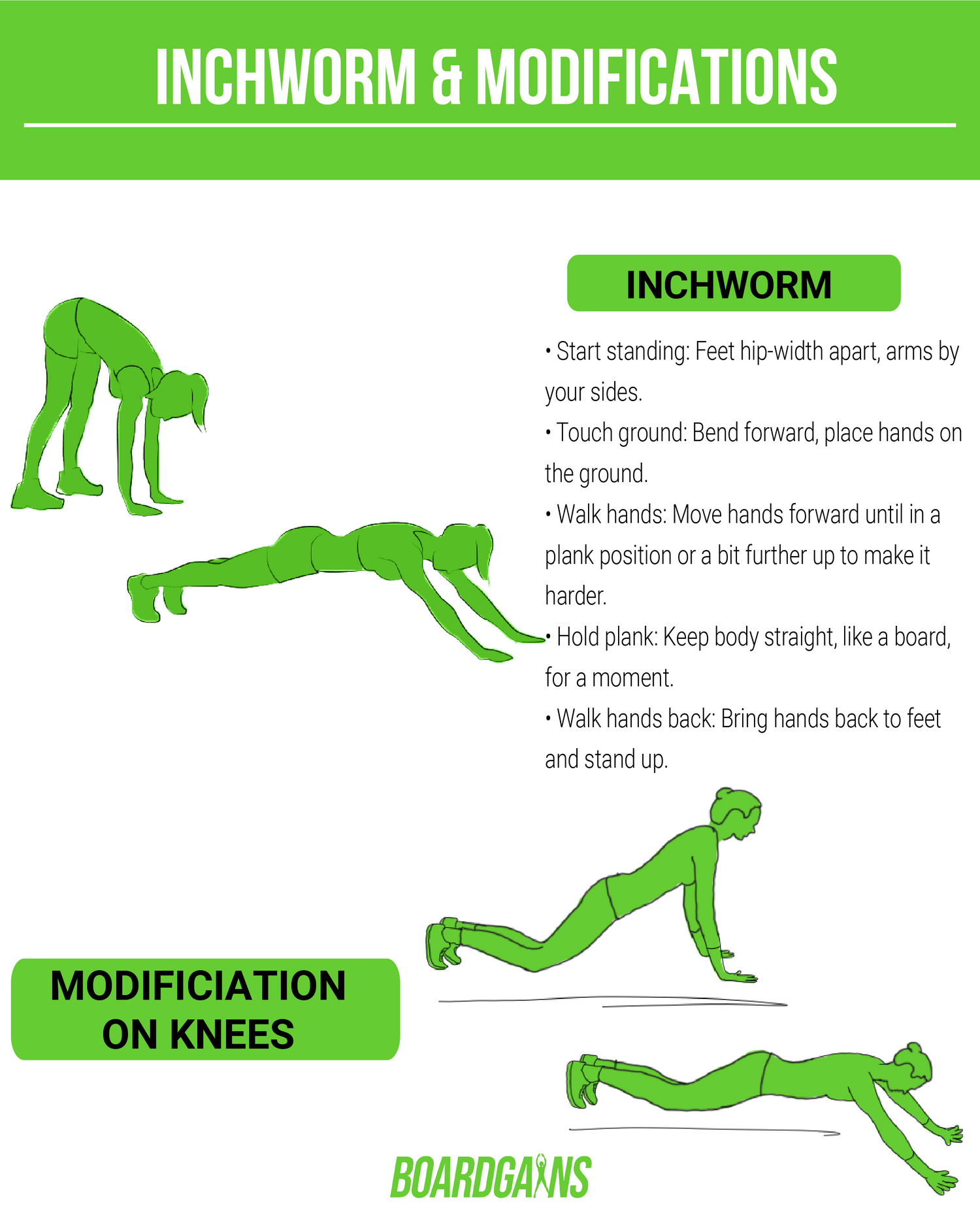
The inchworm is a deceptively simple movement that delivers a full-body effect through controlled motion, stability, and stretch. At first glance, it appears to be just a dynamic stretch, but underneath that smooth sequence lies a coordinated activation of multiple muscle groups working together.
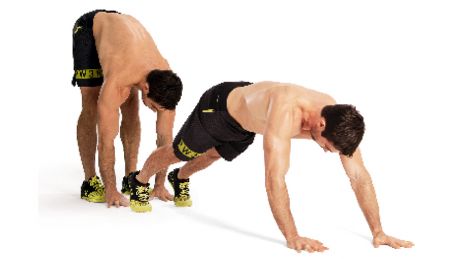
The movement begins in a standing position, feet set hip-width apart, posture upright and balanced. From here, the body folds forward at the hips, initiating a deep stretch through the hamstrings. This phase alone begins the engagement, as the posterior chain lengthens and prepares for movement.
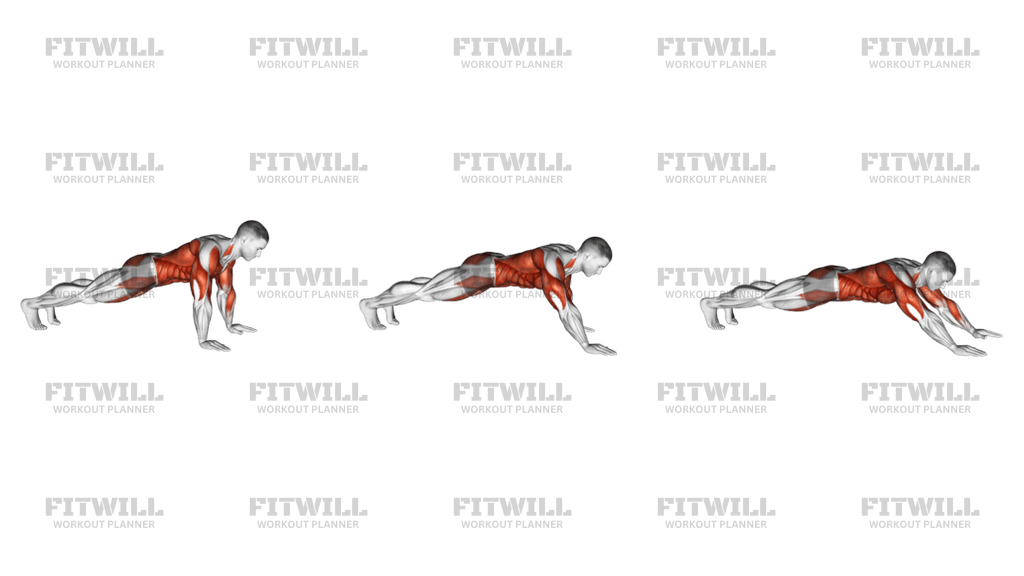
As the hands reach the ground and begin to walk forward, the role of the upper body becomes more apparent. The shoulders activate immediately to support body weight, stabilizing the arms as they extend into a plank position. This is where the core takes over as a central force. The abdominals and obliques contract to prevent the hips from sagging, maintaining a straight and controlled line from head to heels.
Holding the plank briefly for one to two seconds intensifies this engagement. During this pause, the shoulders remain active, the core tightens further, and the chest and triceps assist in maintaining structural integrity. This is not a passive hold. It is an isometric contraction across multiple muscle groups working simultaneously.
From the plank, the feet begin to walk forward toward the hands. This phase reintroduces dynamic tension in the lower body. The calves engage with each step, supporting balance and forward motion, while the hamstrings once again lengthen and contract as the legs move closer to the torso.
Beyond individual muscle activation, inchworms promote coordination between muscle groups. The transition from stretch to stability and back again creates a fluid pattern that enhances both control and awareness. The spine moves through flexion and extension in a controlled manner, improving mobility without impact or strain.
At the same time, the shoulders develop stability through repeated loading in the plank position. This stability is not built through heavy resistance, but through sustained control and alignment, reinforcing proper joint positioning.
Inchworms function as more than a warm-up or mobility drill. They are a continuous loop of stretch, stabilization, and controlled movement that integrates the hamstrings, calves, core, shoulders, chest, and triceps into a single coordinated action.
