
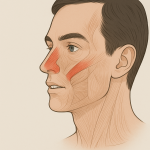
The Levator Labii Superioris muscle is a facial muscle responsible for raising the upper lip, often associated with expressions like snarling or lifting the corner of the mouth. Understanding how to engage and exercise this muscle can enhance your facial expressions and overall facial muscle tone.
Location and Function: Located in the face, specifically around the upper lip and nose area, the Levator Labii Superioris muscle aids in various facial expressions involving the upper lip, such as sneering or lifting the lip in a snarl.
Exercises to Strengthen:
- Snarling Exercise: Mimic a snarl by lifting your upper lip as if showing your teeth. Hold this position for 5-10 seconds, then relax. Repeat for several sets.
- Facial Flexibility: Practice alternating between a relaxed upper lip and a lifted position, gradually increasing the hold time to challenge the muscle.
Benefits of Exercise: Regular exercises targeting the Levator Labii Superioris can improve facial muscle tone, enhancing your ability to express emotions effectively through facial gestures.
Supporting Muscles: This muscle works synergistically with other facial muscles, such as the Zygomaticus Major (responsible for smiling) and the Orbicularis Oris (controls lip movement), to create comprehensive facial expressions.
Skill Levels and Progression: Beginners can start with simple snarling exercises and gradually increase hold times and repetitions. Advanced practitioners may incorporate resistance, such as gently pulling the upper lip downwards to increase muscle engagement.
Conclusion: Understanding and exercising the Levator Labii Superioris muscle not only enhances facial expressiveness but also contributes to overall facial muscle health. Incorporate these exercises into your routine to maintain facial muscle tone and flexibility.


